
'20 per cent of the global AI researchers are of Indian origin, and we should bring them back.'

The aim is to win over the country's enterprises, developers and startups as AI systems shift from answering questions to autonomously executing tasks.

IIT-Kanpur has developed an AI-powered "Family Score" system to identify households needing welfare support using existing government data. This system, demonstrated in collaboration with the Andhra Pradesh government, aims to provide a faster and more cost-effective alternative to traditional surveys for assessing socio-economic conditions and ensuring targeted welfare delivery.
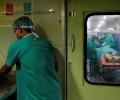
Prof Ajit Kumar Chaturvedi, Vice-Chancellor of Banaras Hindu University, highlighted Artificial Intelligence's transformative potential in healthcare, emphasising its role in augmenting doctors' capabilities and enhancing efficiency. Speaking at PGIMER's Foundation Day, he stressed the need for India to develop AI solutions tailored to its unique healthcare realities, moving beyond being a mere consumer of Western-trained systems. PGIMER Director Vivek Lal also detailed the institute's expansion and commitment to affordable healthcare.

Uttar Pradesh Governor Anandiben Patel addressed AI Manthan 2.0, advocating for the comprehensive integration of Artificial Intelligence across all university subjects rather than as a standalone course. She urged universities to develop clear, time-bound AI roadmaps covering education, research, healthcare, and agriculture, emphasising indigenous AI development, employment creation, and the importance of "Safe and Trusted AI." The event also saw the formation of an AI Policy Advisory Group and an AI Implementation Group to drive these initiatives.
Researchers from IIT Guwahati and BHU have devised an eco-friendly biological method to treat textile wastewater, specifically targeting toxic azo dyes. Their novel bacterium, 'Brevundimonas sp. AJZ05', effectively degrades 98.50 per cent of Direct Blue-6 dye, producing non-toxic byproducts, offering a sustainable alternative to conventional chemical treatments.

Six faculty members from IIT Madras have been awarded the prestigious ANRF J C Bose Grant, recognising their outstanding research contributions in engineering and science. The highly competitive grant provides Rs 25 lakh annually for five years to support frontier research.
BRICS leaders, in their New Delhi Declaration 2026, have called for wider access to Artificial Intelligence resources and stronger international cooperation to ensure the technology is safe, secure, inclusive, and reliable. The declaration outlines a broad technology agenda covering AI, cybersecurity, digital public infrastructure, telecom, quantum technologies, and advanced manufacturing, committing to implement the grouping's statement on 'Global Governance of Artificial Intelligence'.

'India has the maths talent, academic institutions, and research institutions to do the next big thing.'
Researchers at IIT Madras have discovered that rare 'specialist' marine microorganisms play a crucial and previously underestimated role in maintaining the stability of ocean ecosystems. Their global analysis of bacterial communities, published in 'mSystems', reveals these microbes act as vital connectors within microbial networks, significantly impacting ecosystem resilience and informing conservation efforts.
An international research team has discovered a new species of subterranean earthworm eel, named Gangaichthys indonepalicus, in the Indo-Gangetic Plain of Bihar. This small, colourless fish, adapted to life in dark underground aquifers, is the first stygobitic fish recorded from the Gangetic Basin. The discovery followed a TikTok video and involved challenging manual pumping of borewell water to secure samples for scientific analysis.

GenAI recorded the widest talent gap, followed by AI deployment engineering (72.4 per cent), AI governance (70 per cent), and MLOps (68 per cent).

Chief Justice of India Surya Kant stated that while artificial intelligence (AI) can augment judicial reasoning, it cannot substitute judicial conscience, and a permanent apex body is proposed to supervise AI adoption and accountability within the judiciary.
AI4Bharat at IIT Madras and Josh Talks AI have launched 'Voice of India', a multimodal AI evaluation platform designed to assess AI systems against Indian conditions, languages, accents, and dialects. This platform aims to provide scientifically rigorous, India-specific evaluations, covering areas like Voice AI, large language models, document processing, safety, cultural appropriateness, and Indian legal reasoning, to build trust and enable informed deployment decisions.

The judgment is India's first to examine AI companies' use of copyrighted works for foundation models, setting an analytical framework for Section 52 of the Copyright Act.

Vice President C P Radhakrishnan has championed the use of artificial intelligence for good governance, highlighting its potential to improve government services and build an inclusive and efficient India.

HCLTech, India's third-largest IT services company, announced plans to establish a global technology centre and an AI-optimised data centre in Bhubaneswar, Odisha, with a total investment of approximately Rs 15,000 crore, marking its entry into the AI infrastructure business.

Dr Lovi Raj Gupta, pro vice-chancellor, Lovely Professional University, explains how aspiring professionals can equip themselves for a competitive AI-driven job market.

Sarvam AI, an Indian full-stack sovereign artificial intelligence company, has achieved unicorn status after raising $234 million in a Series B funding round led by HCLTech and Bessemer Venture Partners, with HCLTech acquiring a 10.46 per cent stake.

Olympic medallist PV Sindhu has initiated the 'PV Sindhu Centre for Sports Excellence' in Visakhapatnam, with Andhra Pradesh IT Minister Nara Lokesh performing the groundbreaking. This integrated sports and education ecosystem aims to provide world-class coaching, sports science, and academic support across seven disciplines, establishing Visakhapatnam as a national sports hub.
Switzerland will host the next global AI summit in June 2027 in Geneva, aiming to establish stable processes for AI governance and promote its responsible use. Building on previous summits, including one in New Delhi, the event will focus on AI as a driver of prosperity and human-centred innovation, bringing together governments, organisations, and civil society to address global challenges.
Researchers have successfully recreated in a laboratory setting how high-energy cosmic rays interact with Earth's atmospheric gases. Using CERN's Large Hadron Collider, an international team simulated collisions between cosmic particles, similar to those from supernovae, and oxygen beams. This unprecedented experiment provides a clearer understanding of interstellar particles and phenomena like the Northern Lights, improving upon previous computer simulations.

UN Women has issued a stark warning that the rapid advancement of artificial intelligence (AI) is placing women at a higher risk of discrimination and digital violence, citing studies that reveal significant gender bias in AI systems and large language models.
Union Education Minister Pralhad Joshi announced that revised NCERT textbooks for classes 10 to 12 are being prepared in "mission mode," while textbooks for classes 1 to 9 under the new National Curriculum Framework have already been released. He emphasised NCERT's role in building a 'Viksit Bharat' and highlighted the need for curricula to evolve with AI advancements and the importance of India's young population as a global asset.
A three-day conference, "Dharma in the Digital Age 2026," is taking place at the University of Houston, bringing together scholars and scientists to discuss how ancient Dharmic principles can address contemporary ethical, technological, and societal challenges, including AI, digital governance, and sustainability.
Union Health Minister J P Nadda has emphasised the need for sound regulation, ethical oversight, and equity in the application of Artificial Intelligence (AI) to healthcare, speaking at the World Health Assembly in Geneva.

Prime Minister Narendra Modi cautioned against the 'weaponisation' of technology and critical minerals at the BRICS summit, advocating for cooperation to foster shared prosperity. Concurrently, Chinese President Xi Jinping announced plans for an open-source AI ecosystem for BRICS nations, positioning Beijing as a key technology partner amid global AI competition.

J R D Tata, chairman of the Tata group from 1938 to 1991, said that whenever he had to make a difficult decision, he would ask himself, what will be good for India, and what will be good for the Tatas. If he had a doubt, he would decide in favour of India. In the long run, it would turn out well for the Tatas too, he said, points out Arun Maira.

Finance Minister Nirmala Sitharaman announced that the Goods and Services Tax (GST) Council's October 7 meeting will focus on 'GST 2.0' process reforms, including e-invoicing and input tax credit rules, while also addressing complex issues surrounding the taxation of the digital economy and cryptocurrency.

The Indian Institute of Science (IISc) and Groww Foundation have launched a semiconductor skill development programme to train the next generation of talent, with a focus on encouraging participation from women and young students.
Researchers at IIT-ISM Dhanbad have been granted an Indian patent for an electrochemical reactor designed to recover copper from industrial wastewater. This innovative technology offers an environmentally sustainable solution for resource recovery and wastewater treatment, particularly benefiting the mining and metallurgical sectors.
A joint study by IBM and IndiaAI, a MeiTY initiative, indicates that Artificial Intelligence (AI) has the potential to contribute over USD 500 billion to India's economy by 2030. The report highlights the need for improved AI literacy, infrastructure, and data quality to fully realise this potential.

Amar Subramanya's appointment comes as John Giannandrea, Apple's senior vice-president for machine learning and AI Strategy, prepares to step down, transitioning to an advisory role before retiring in spring 2026.

Chief Justice of India Surya Kant has cautioned against the uncritical adoption of Artificial Intelligence in the judiciary, emphasising the need to balance technological advancements with human intellect and ethical considerations.

Ajay Kela, CEO of Wadhwani Foundation, highlights India's significant opportunity to lead in the diffusion of technology, creating national-scale use cases that reach millions of end-users. He also discusses the role of deep-tech startups and SMEs in job creation and the importance of upskilling initiatives.

Union Minister Jitendra Singh inaugurated a new biotechnology facility and dedicated a national facility for recombinant cells and sensors at the Rajiv Gandhi Centre for Biotechnology in Thiruvananthapuram, highlighting India's focus on biotechnology and its potential for economic growth.
Chief Justice of India Surya Kant cautioned against the uncritical adoption of AI in the judiciary, emphasising the need for human judgement and ethical considerations in judicial decision-making.

'Improved law and order and transparent governance have helped change UP's investment image.'
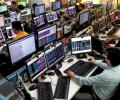
India Inc on Sunday hailed the Union Budget 2026-27 as a 'structural shift' in the country's technology landscape, noting that the government is moving beyond fragmented pilots to build foundational layers where AI serves as a 'horizontal enabler' for the entire economy.

Vertex Group has launched its 'Responsible AI Lab' with a Rs 100 crore investment in research and development, focusing on ethical, transparent, and accountable AI solutions for businesses.
